 South Korea
Food in South Korea: Dishes to Know, Markets, Prices and Table Manners
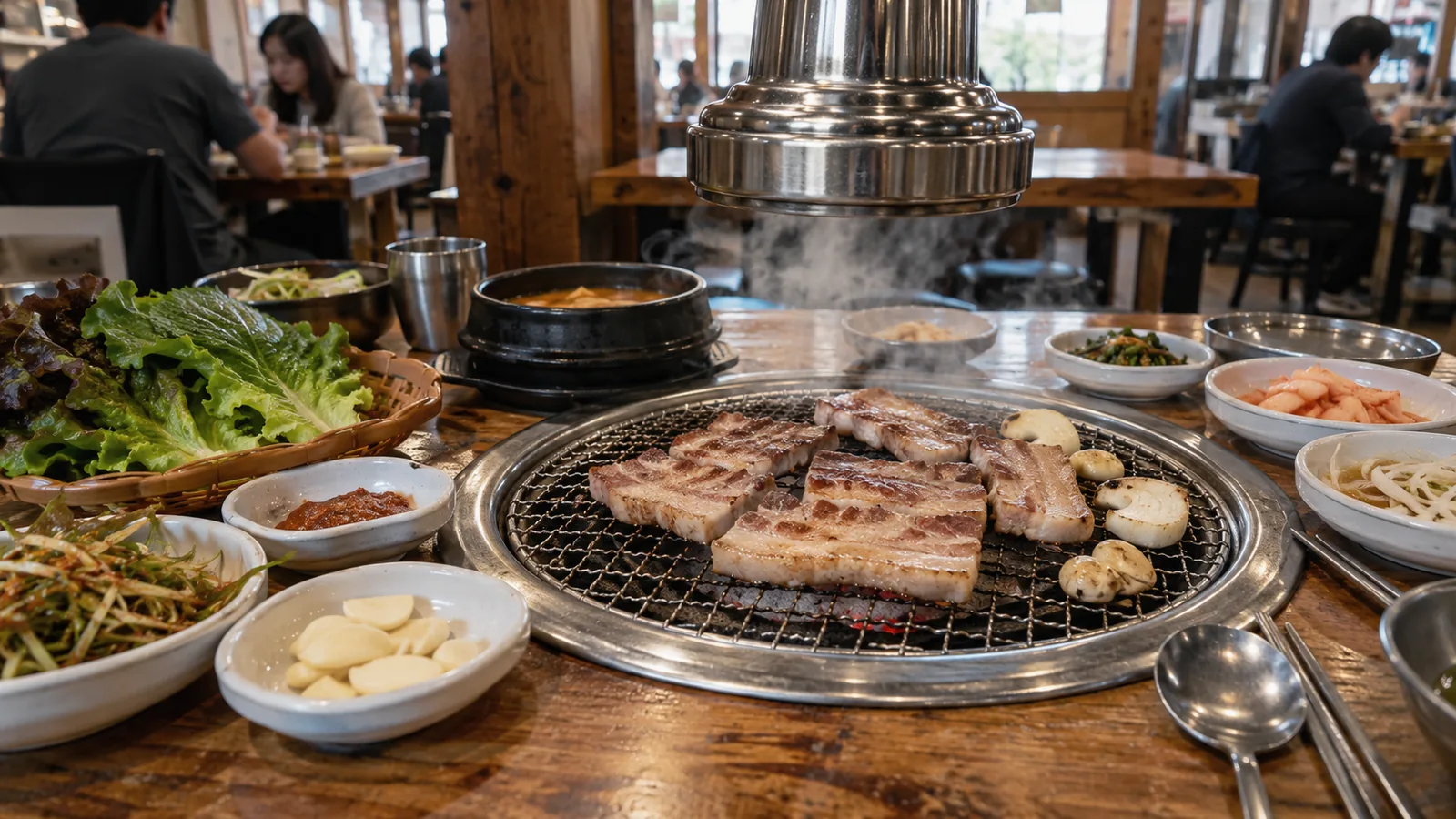
Food in South Korea is the reason a lot of people book the trip, and it holds up. Meals are built around rice, soup or stew, and a spread of small side dishes called banchan that arrive free with almost every order. A filling restaurant lunch in Seoul still runs about ₩9,000 to ₩13,000 (roughly $7 to $10 at October 2026 rates), which is less than a sandwich and a drink in most US cities.
This page covers the dishes to know, where to eat them, what they cost right now, and the handful of table habits that make ordering easier. If you're still sketching the trip, the South Korea trip cost guide shows how food fits into a daily budget.
Popular food in South Korea: the dishes to know
You don't need a long list. These are the dishes you'll see on menus everywhere, and ordering any of them is a safe bet on a first trip.
- Bibimbap: rice topped with seasoned vegetables, usually meat and an egg, mixed with chili paste at the table. Jeonju, southwest of Seoul, is the city most associated with it.
- Korean BBQ (samgyeopsal, bulgogi, galbi): meat grilled at your table, cut with scissors, and wrapped in lettuce with garlic and sauce. Pork belly (samgyeopsal) is the everyday choice; beef costs more.
- Kimchi jjigae: a spicy, sour stew of aged kimchi, pork or tuna and tofu, served bubbling with rice. Often sold as a set meal (baekban) with banchan.
- Sundubu jjigae: soft tofu stew, usually spicy. Gangneung on the east coast is known for its own version, Chodang sundubu.
- Naengmyeon: chewy buckwheat noodles in icy beef broth (mul naengmyeon) or with spicy sauce (bibim naengmyeon). A summer favorite that's on menus year round.
- Samgyetang: a whole young chicken stuffed with rice and ginseng, served in broth. Mild, warming and a good pick if you don't like heat.
- Tteokbokki: chewy rice cakes in sweet, spicy red sauce. The default street snack.
- Hotteok: a griddle pancake filled with brown sugar and nuts, sold from street carts and market stalls. Let it cool a minute; the syrup inside is molten.
- Gimbap: rice and fillings rolled in seaweed. Cheap, portable, and the best train snack in the country.
What does food cost in South Korea?
Korea's Ministry of the Interior and Safety tracks average restaurant prices by region, and the Korea Consumer Agency publishes them on its dining-out price site. These are the Seoul averages in the latest release available in October 2026 (September 2026 data, provisional). Expect a little less outside Seoul and more in tourist zones.
| Dish | Average price (KRW) | About (USD) |
|---|---|---|
| Gimbap (one roll) | ₩3,923 | $2.95 |
| Jajangmyeon (black bean noodles) | ₩7,808 | $5.90 |
| Kimchi jjigae set meal | ₩8,846 | $6.65 |
| Kalguksu (knife-cut noodle soup) | ₩10,038 | $7.55 |
| Bibimbap | ₩12,000 | $9 |
| Naengmyeon | ₩12,692 | $9.55 |
| Samgyetang | ₩18,269 | $13.75 |
| Samgyeopsal, 200 g (7 oz) serving | ₩21,321 | $16 |
Two things to know about BBQ pricing. Most places sell meat per serving, and some require at least two servings for the grill. Rice, stew and noodles to finish are extra, so a BBQ dinner for two often lands around ₩50,000 to ₩70,000 once drinks are in. That's an estimate based on the averages above, not a quoted price; menus vary a lot.
Money tip: menu prices in Korea already include tax and service. Korean law requires restaurants to charge the price on the menu, so there's no tip line and no add-on at the register.
South Korea street food and markets
Street food in South Korea is concentrated in traditional markets and busy shopping streets rather than spread across every corner. The market food halls are where you'll eat best for the least money.
Gwangjang Market, Seoul
Seoul's oldest-feeling food market sits next to Jongno 5-ga Station on Line 1 (Exits 7 and 8). According to the Visit Seoul listing, the food alley runs 09:00 to 23:00 year round, while the fabric and goods sections close at 18:00 and shut on Sundays. Order bindaetteok (a thick, crisp mung bean pancake fried in front of you), mayak gimbap (small rolls with mustard dipping sauce) and, if you're adventurous, yukhoe (Korean beef tartare). Sit on the bench at a stall and point; vendors are used to visitors.
Sindang-dong for tteokbokki
Sindang-dong in Jung-gu has been Seoul's tteokbokki neighborhood since the late 1970s, with dozens of restaurants serving their own versions, many cooked in a pan at your table. Go hungry and go in a group; it's a shared-pot meal.
Busan
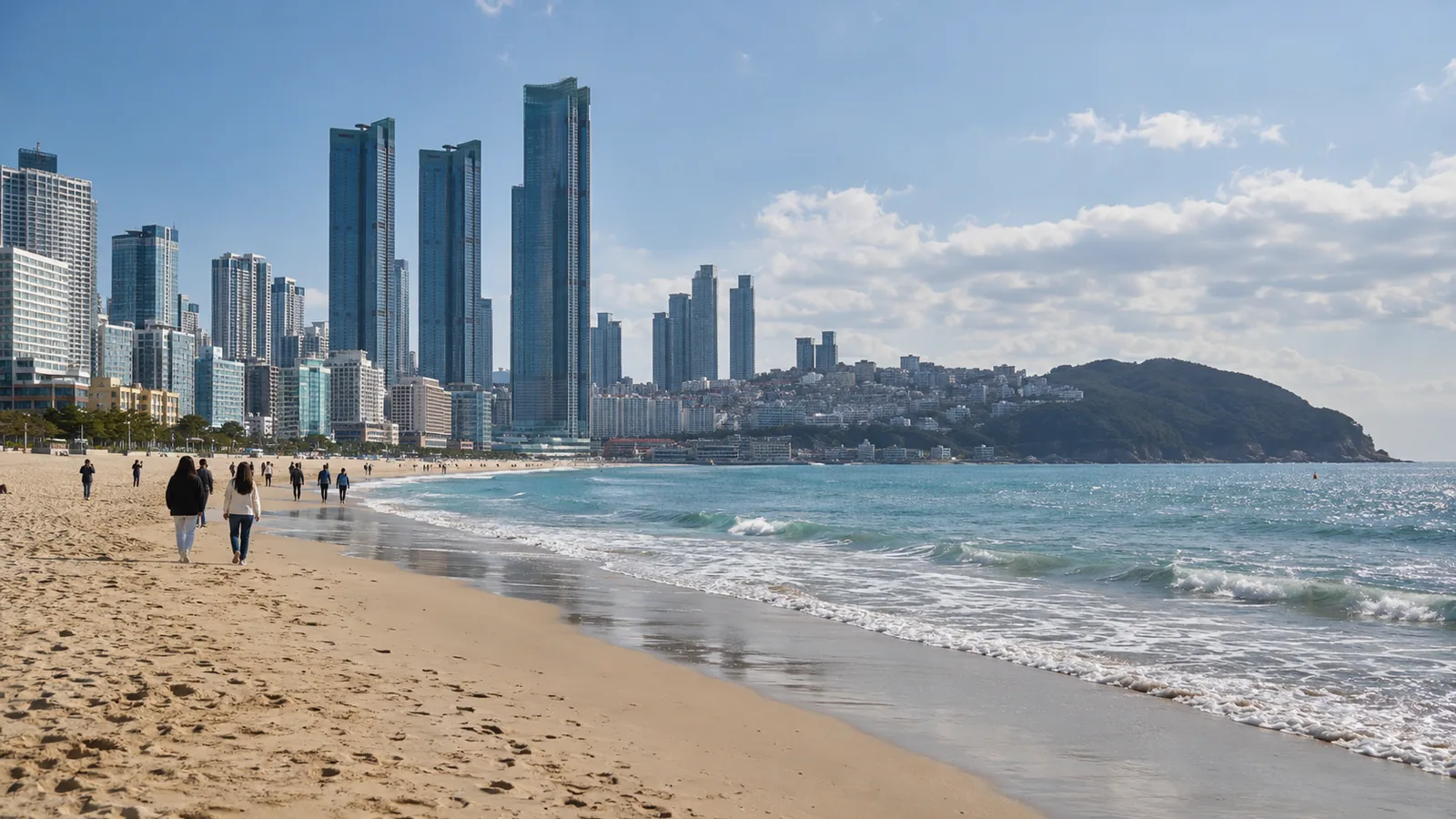
Busan's signature dishes are dwaeji gukbap (pork and rice soup) and milmyeon, a wheat-noodle cousin of naengmyeon. Both are cheap and filling, and you'll find them across the city. Haeundae Market, a short walk from Haeundae Beach, is a good casual stop for seafood and grilled eel, open roughly 09:00 to 22:00 depending on the stall. The Busan guide covers the rest of the city.
Regional dishes worth planning around
Korean cities take their local specialties seriously, and a few are worth building a meal around if your route passes through.
| Dish | Where it's from | What it is |
|---|---|---|
| Heukdwaeji (black pork) | Jeju | Pork from Jeju's black pigs, grilled and cut with scissors at the table |
| Dwaeji gukbap | Busan | Pork and rice soup, a cheap, filling Busan staple |
| Milmyeon | Busan | Chewy wheat noodles in cold broth |
| Jeonju bibimbap | Jeonju | The best-known regional bibimbap, served with many toppings |
| Chodang sundubu | Gangneung | Soft tofu, served as a stew or on its own |
If Jeju is on your list, black pork is the one meal to plan for; see the Jeju Island guide. The South Korea itinerary page shows how to route through Busan and Gyeongju so you hit the coast for seafood.
How to order at a South Korea restaurant
Many restaurants serve one or two dishes, which makes ordering easier than it looks. A few habits help.
- Look for a call button. Many tables have a buzzer. Press it instead of waving. If there's no button, a polite "jeogiyo" (excuse me) works.
- Check for a tablet or kiosk. More restaurants now take orders on a table tablet or a kiosk by the door, and many have an English option.
- Refills are free. Banchan and water refills don't cost extra. Some places have a self-service station for both.
- Count servings at BBQ. Meat is priced per serving (1-inbun), sometimes with a two-serving minimum.
- Pay at the counter. In most casual places you take the bill to the register on the way out. Cards are widely used, but carry some cash for small market stalls.
Korean table manners that matter
Honestly, Koreans are forgiving with visitors. These are the habits that make a difference.
- The spoon is the main tool. Use it for rice and soup; chopsticks are for banchan and anything you pick up. Mixing both is fine.
- Dishes are shared. Banchan sit in the middle and everyone takes from them. Eat from the side nearest you.
- For a lettuce wrap (ssam), put meat and sauce on the leaf, fold it, and eat it in one bite.
- At some BBQ restaurants the staff cut and turn the meat for you. Let them; they're good at it.
Vegetarian and dietary needs
Vegetarian travel in Korea takes some planning. As the Korea Tourism Organization's vegetarian guide points out, kimchi seasoning usually contains salted seafood or fish sauce, soft tofu stews often include salted shrimp, and even vegetable gimbap can contain ham, egg or imitation crab. Bibimbap usually comes with meat and egg, so ask for them to be left off.
Your best options are Buddhist temple food, which uses no meat at all and is now served at restaurants outside temples, and telling the server clearly what you don't eat. A short note in Korean on your phone works better than English. The free 1330 Korea Travel Hotline can interpret over the phone if you get stuck; more on that in our South Korea travel tips.
Next step: pick two or three dishes from the list above, then check the Seoul guide for the neighborhoods where you'll be staying and eating.
Frequently asked questions
What is the most popular food in South Korea?
Kimchi is on almost every table, and Korean BBQ, bibimbap, kimchi jjigae and tteokbokki are the dishes visitors order most. Rice with soup or stew and free side dishes is the everyday meal.
How much does food cost in South Korea?
Seoul's average bibimbap price was ₩12,000 (about $9 at October 2026 rates) in the latest government data, and a kimchi stew set meal averaged ₩8,846 (about $6.65). Korean BBQ costs more because meat is priced per serving.
Do you tip at restaurants in South Korea?
No. Menu prices include tax and service by law, and restaurants charge exactly the listed price.
Is Korean food very spicy?
Many dishes use chili paste or chili flakes, but plenty are mild, including bulgogi, samgyetang, naengmyeon in broth, gimbap and dwaeji gukbap. You can ask for less spice at many places.
Is it easy to be vegetarian in South Korea?
It's harder than in the US because fish sauce, salted shrimp and meat broth show up in many dishes, including most kimchi. Temple food restaurants and a clear written note for the server make it workable.
Sources
- www.price.go.kr/tprice/portal/servicepriceinfo/dineoutprice/dineOutPriceList.do
- english.visitseoul.net/shopping/Gwangjang-Market/ENP000286
- english.visitkorea.or.kr/public/contents/region/ENG/Seoul_TravelGuide_ENG.pdf
- english.visitseoul.net/restaurants/Sindang-dong-Tteokbokki-Town/ENN032615
- english.visitkorea.or.kr/svc/contents/contentsView.do?vcontsId=140732&menuSn=912
- english.visitkorea.or.kr/svc/contents/contentsView.do?vcontsId=229195&menuSn=903
- english.visitkorea.or.kr/svc/contents/contentsView.do?vcontsId=221205&menuSn=904
- english.visitkorea.or.kr/svc/contents/contentsView.do?menuSn=977&vcontsId=84963
- english.visitkorea.or.kr/public/contents/region/ENG/Busan_TravelGuide_ENG.pdf
- www.koreatimes.co.kr/amp/southkorea/society/20250807/explainer-why-tipping-culture-remains
Prices, schedules and entry rules change. Confirm details with official sources and operators before you travel. See our terms of use.