 South Korea
Where to Stay in South Korea: Best Areas, Hotels, Hanok Stays and Temple Stays
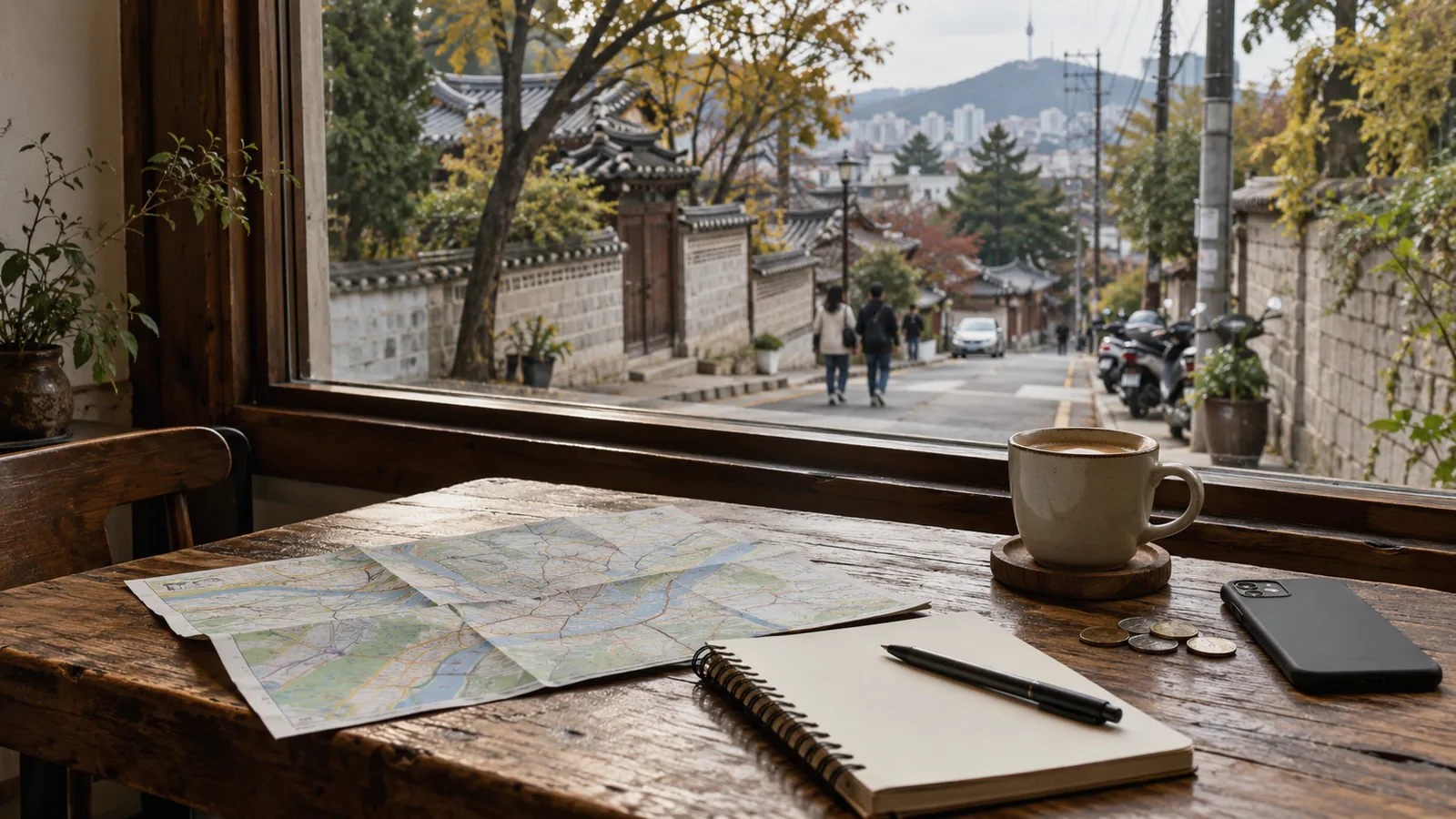
In Seoul, stay near Myeongdong or the palaces (Jongno and Insadong) for a first trip, or Hongdae if you want nightlife and lower prices. In Busan, Haeundae is the beach base. In Gyeongju, book near Hwangnidan-gil and the royal tombs. On Jeju, the choice comes down to where you'll drive each day.
Lodging types matter as much as location. Korea has international chains and Korean business hotels, but also hanok (traditional houses), guesthouses, motels and temple stays, which can be the most memorable nights of the trip.
Where to stay in Seoul
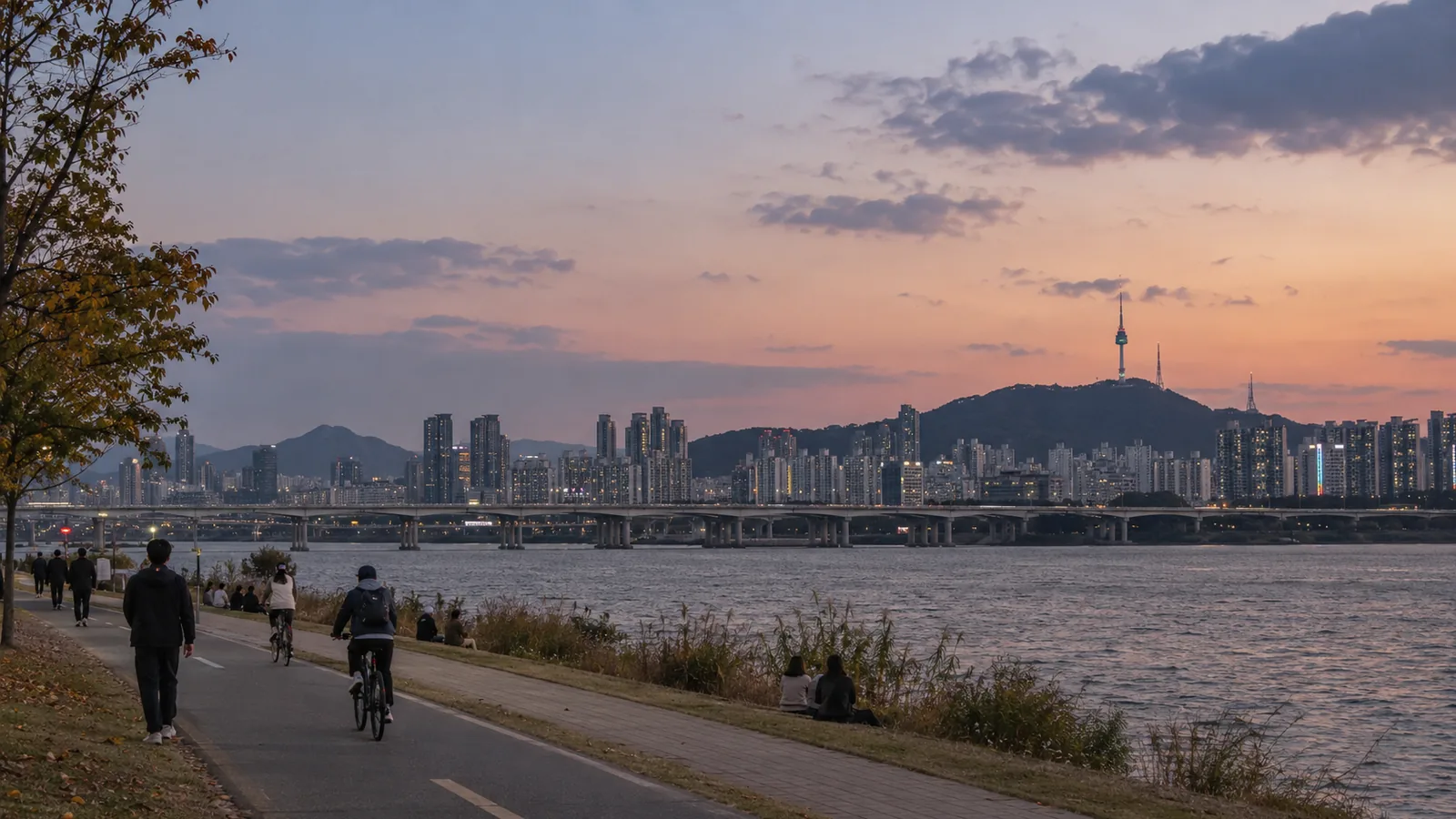
Seoul is big, but the subway is excellent, so you mostly choose by mood. Being within a short walk of a subway station matters more than the exact district. If you're arriving from Incheon, a stop on the AREX airport line (Seoul Station or Hongik University Station) saves a transfer with luggage.
| Area | Best for | What it's like |
|---|---|---|
| Myeongdong | First-timers, shoppers | Seoul's best-known shopping district, with department stores, cosmetics shops and Myeongdong Cathedral nearby |
| Jongno and Insadong | History, palaces, tea houses | Close to Gyeongbokgung and Changdeokgung; antique shops, galleries and traditional teahouses; Cheonggyecheon stream walk |
| Bukchon and Ikseon-dong | Hanok stays | Over 900 traditional houses in Bukchon; narrow alleys and restaurants in Ikseon-dong |
| Hongdae and Yeonnam-dong | Nightlife, budget, younger travelers | Murals, live music, clubs, cafes; on the AREX airport line at Hongik University Station |
| Gangnam | Business trips, modern hotels | South of the river; newer towers and big hotels, longer rides to the palaces |
Bukchon note: since October 2024 the village has been a Special Management Area, and visitor access in its Red Zone is restricted from 5 p.m. to 10 a.m., with fines for violations. Ask your host how this applies to overnight guests before booking. More on each area is in our Seoul travel guide.
Types of lodging and what they cost
Prices swing with season and day of week. The Korea Tourism Organization notes that rooms are usually cheaper on weekdays than weekends, so a nicer hotel may be affordable midweek. Here's what official sources say, converted at ₩1,330 = $1 (October 2026).
| Type | Typical price per night | Good to know |
|---|---|---|
| Yeogwan (basic inn) | Seoul average ₩53,000 (about $40) | Government consumer price survey figure for a single room with bath |
| Motel | Budget; varies by city and day | Tidy private rooms at affordable rates, per KTO; the ones locals call love motels rent the same way |
| Guesthouse | Varies; often the cheapest option | Dorms or 1 to 2 person rooms; shared or private bathrooms; some host parties |
| Benikea business hotel | Around ₩100,000 (about $75) | KTO-run chain, 22 branches; KTO's figure may be dated, so check the hotel |
| Hanok stay | Varies widely; check the listing | Many rooms use floor mattresses; ask for a bed if you need one |
| Temple stay | Set by each temple | Overnight or day programs at Buddhist temples |
| International hotels | Varies; book early for spring and fall | Chains and Korean luxury brands concentrate in Seoul, Busan and Jeju |
Outside the cities, look at pensions: private guesthouse-style rentals popular with Korean families and groups. KTO describes everything from simple rooms to pool villas, many with barbecue grills for samgyeopsal. Not all accept children or pets, and breakfast may or may not be included, so check before you book.
Hotel rates move too fast for a fixed number to stay accurate, so we don't quote them. Check two or three booking sites for your dates and compare to the daily budgets in our South Korea trip cost guide.
What is a hanok stay?
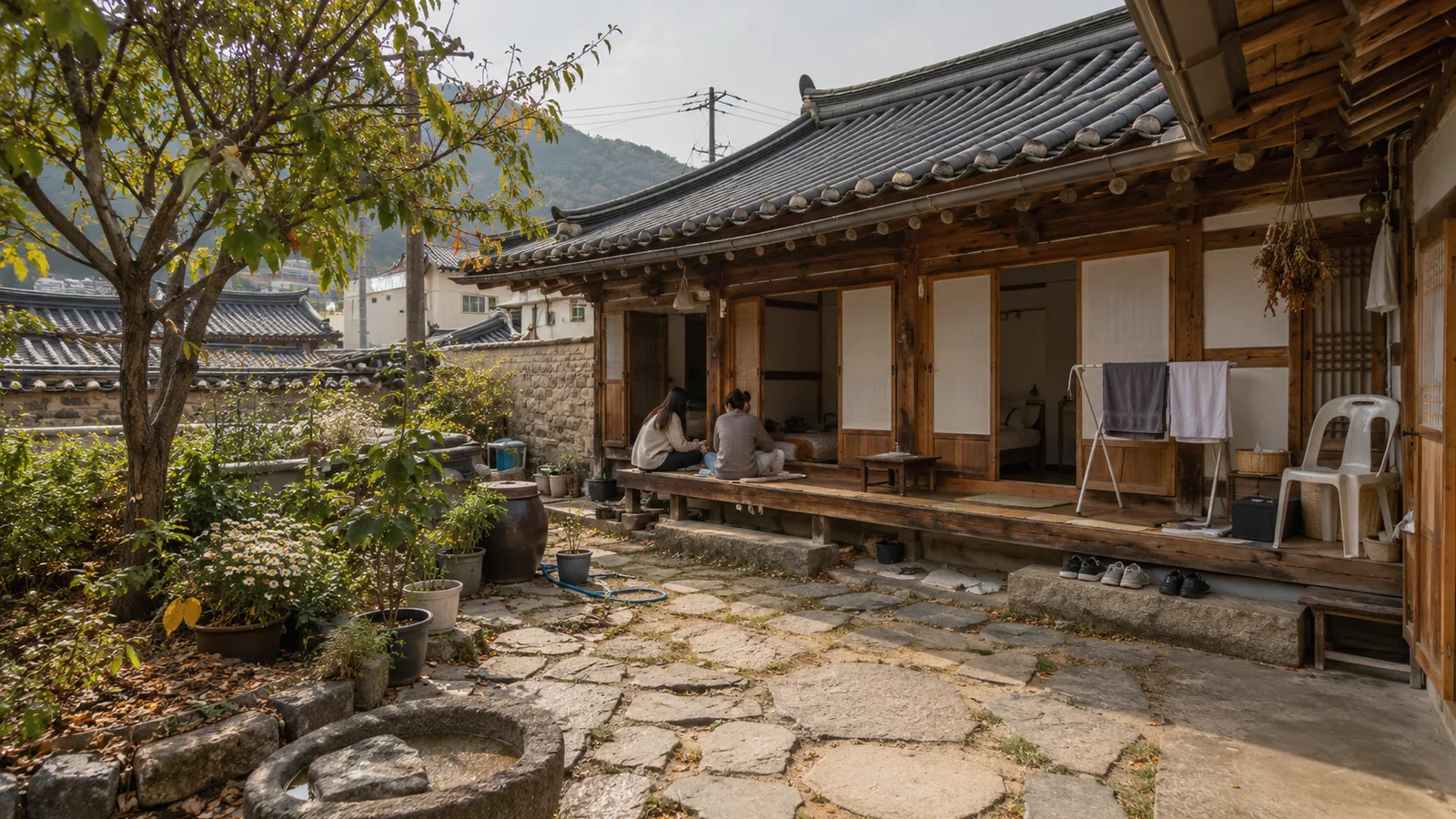
A hanok is a traditional Korean wooden house, typically with a front yard you can see from every door and window. The Korea Tourism Organization's hanok stay guide points to three main clusters: Bukchon Hanok Village in Seoul, Jeonju Hanok Village (the country's largest), and Hwangnidan-gil in Gyeongju.
- Sleeping: many hanok use floor mats and blankets with ondol (heated floors). Filter for rooms with beds if floor sleeping isn't for you.
- Facilities: some are basic, with shared bathrooms. Read the listing carefully.
- Care: hanok are built of wood, so be careful with any flame, and some are designated cultural assets, so treat the building gently.
- Finding one: the Seoul government's Seoul Stay site lists registered urban stays and hanok stays in the capital.
Where to stay in Busan, Jeju and Gyeongju
Busan
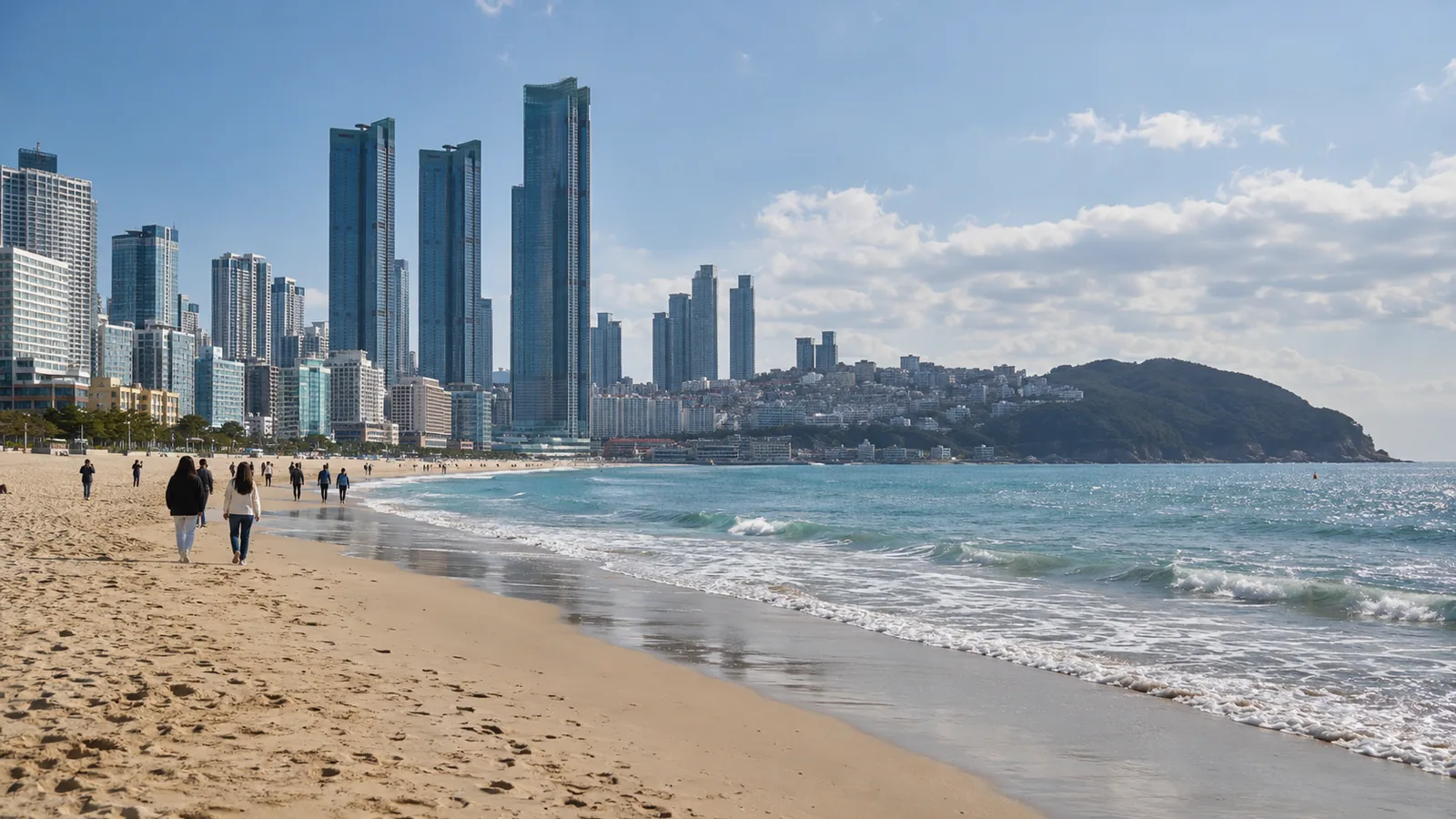
Haeundae and Gwangalli are the beachfront bases, with lots of guesthouses, cafes, bars and restaurants. They suit summer trips and anyone who wants to wake up near the sea. For more on the city, see our Busan guide.
Jeju Island
Jeju City on the north coast is the practical base: it's the island's main city and home to the Jeju Welcome Center. Seogwipo on the south coast is quieter and closer to waterfalls and the southern Olle trails, but noticeably wetter: about 103 inches (2,618 mm) of rain a year against 68 inches (1,728 mm) in Jeju City, per the island's official visitor leaflet. With a rental car, splitting nights between the two works well. Details are in the Jeju Island guide.
Gyeongju
Stay near Hwangnidan-gil and Daereungwon tomb complex. KTO lists many guesthouses there, including renovated hanok, and you can walk to the tombs, Cheomseongdae and Wolji Pond at night. Gyeongsangbuk-do's tourist guide also lists temple stays at Bulguksa, Golgulsa and Girimsa. See our Gyeongju guide for the sights.
Temple stays, guesthouses and Korea Quality hotels
A temple stay puts you inside a working Buddhist temple: early-morning ceremonies, meditation, tea with monks and a communal meal. Programs are run through the Templestay site of the Jogye Order, in day, experience, relaxation and group formats. In Seoul, Jogyesa near Insadong runs programs for foreign visitors.
Guesthouses are popular with young Korean travelers. Some host nightly parties, while others are quiet; some are women-only or separate guests by gender. Breakfast is usually simple, and many have no parking.
For a quality signal, look for KTO's Korea Quality certification, which covers tourist hotels, guesthouses, hanok stays and youth hostels that meet its service standards.
How to choose where to stay in South Korea
- Pick your bases first using the South Korea itinerary plans, then book two or more nights in each.
- Choose a place within a few minutes' walk of a subway or main train station.
- Check for beds versus floor mattresses, private versus shared bathrooms, and elevator access.
- Book early for April, May, October and the Seollal and Chuseok holidays.
- Confirm the cancellation policy, since typhoons can disrupt summer and early fall travel.
Stuck with a booking problem? The 1330 Korea Travel Helpline (+82-2-1330 from abroad, 1330 in Korea) can help in multiple languages.
Frequently asked questions
What is the best area to stay in Seoul for first-time visitors?
Myeongdong or Jongno and Insadong. Both are central, close to the palaces and shopping, and well served by the subway.
How much are hotels in South Korea?
It varies a lot by city and season. Korea's consumer price survey puts a basic Seoul inn around ₩53,000 (about $40), and KTO lists its Benikea business hotels at around ₩100,000 (about $75) a night.
Is a hanok stay worth it?
Yes for one or two nights, especially in Bukchon, Jeonju or Gyeongju. Check whether the room has a bed and a private bathroom, since many use floor mattresses.
Are love motels in Korea safe for tourists?
Motels are a normal budget option in Korea, and the Korea Tourism Organization describes them as tidy and affordable. Expect a private room with its own bathroom; read recent guest reviews as you would anywhere.
Can foreigners do a temple stay in Korea?
Yes. Many temples run programs for foreign visitors, booked through the Jogye Order's Templestay website, including Jogyesa in central Seoul.
Sources
- english.visitkorea.or.kr/svc/contents/contentsView.do?vcontsId=140678
- english.visitkorea.or.kr/svc/contents/contentsView.do?vcontsId=140679
- english.visitkorea.or.kr/svc/contents/contentsView.do?vcontsId=140677
- english.visitkorea.or.kr/svc/contents/contentsView.do?vcontsId=140680
- english.visitkorea.or.kr/svc/contents/contentsView.do?vcontsId=140638
- english.visitkorea.or.kr/public/contents/region/ENG/Seoul_TravelGuide_ENG.pdf
- english.visitkorea.or.kr/public/contents/region/ENG/Gyeongsangbuk-do_TravelGuide_ENG.pdf
- english.visitkorea.or.kr/public/contents/region/ENG/Jeju_TravelLeafleet_ENG.pdf
- stay.visitseoul.net/seoul-stay?lang=en
- www.templestay.com
- www.price.go.kr/tprice/portal/servicepriceinfo/serviceindustryprice/serviceIndustryPriceLi
- english.visitkorea.or.kr/svc/contents/contentsView.do?vcontsId=140632
Prices, schedules and entry rules change. Confirm details with official sources and operators before you travel. See our terms of use.