 South Korea
 Facts: 25 Things Worth Knowing Before You Go
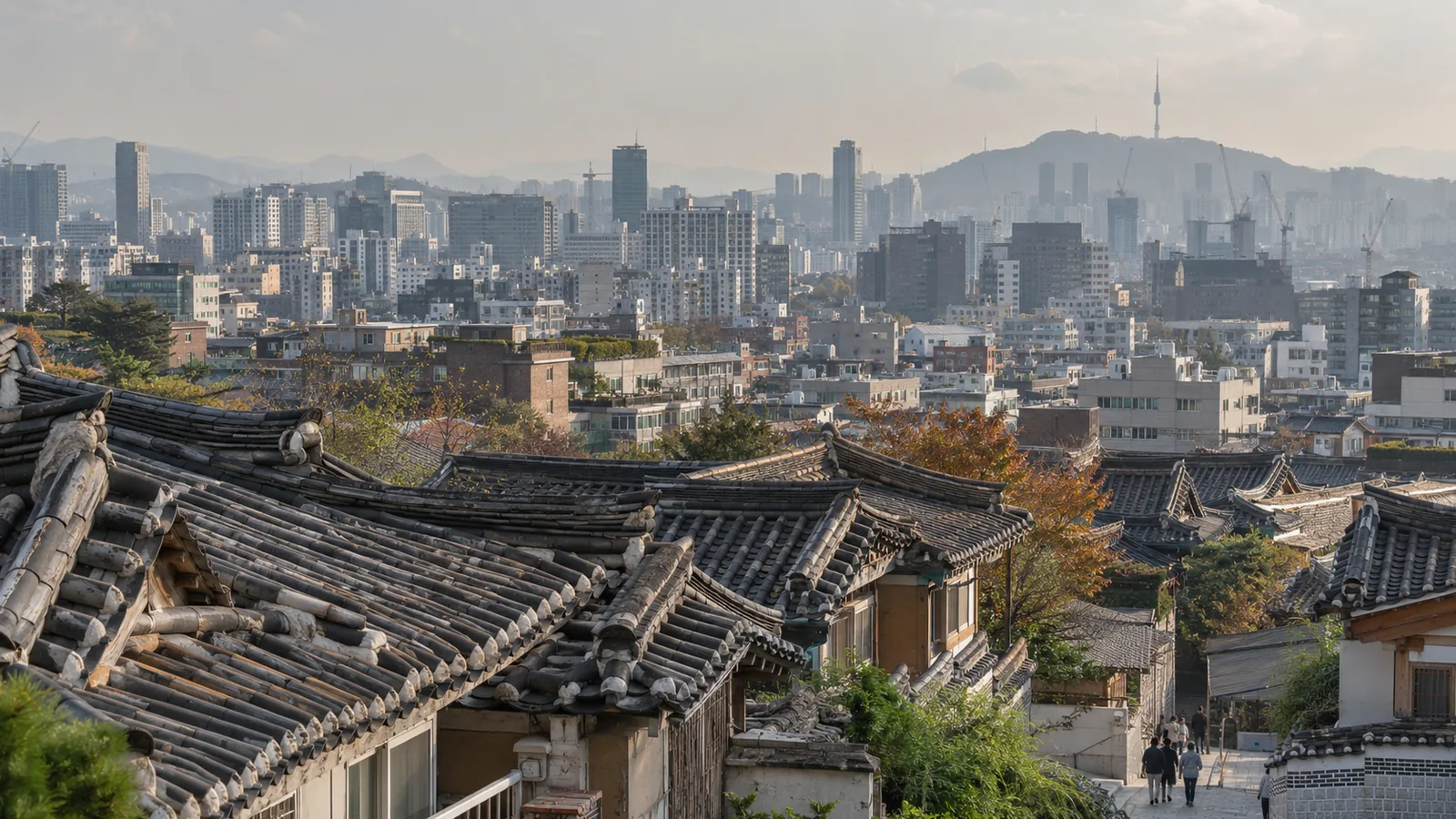
South Korea is a country of about 51.8 million people on the southern half of the Korean Peninsula, with Seoul as its capital, the won as its currency and Korean as its language. Those are the basics. The facts below go further, and every one was checked against an official or primary source in 2026.
I've grouped them by theme and added a line on why each matters if you're actually going. Fun facts are nice; fun facts that save you a headache at the train station are better.
Quick facts about South Korea
| Fact | Detail |
|---|---|
| Official name | Republic of Korea |
| Capital | Seoul (9,315,066 people, 2025 census) |
| Population | 51.82 million (2025 census) |
| Language and script | Korean, written in Hangeul |
| Currency | Won (KRW); site rate ₩1,330 = $1 (October 2026) |
| Time zone | Korea Standard Time, UTC+9 |
| Electricity | 230 V, 60 Hz; plug types C and F |
| National flower | Mugunghwa (Rose of Sharon) |
| UNESCO World Heritage sites | 17 (15 cultural, 2 natural) |
Facts about South Korea's people
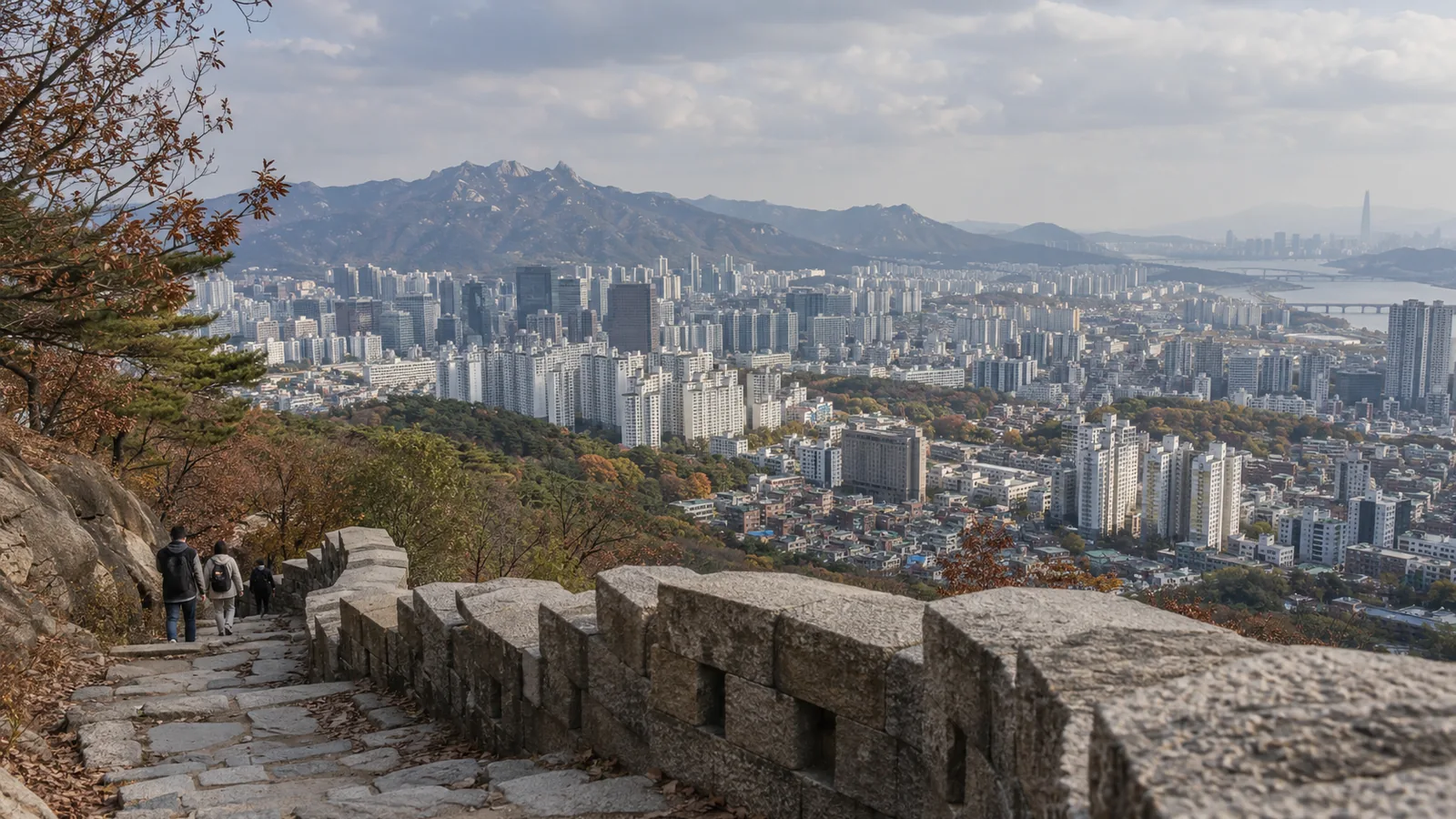
- Just over half the country lives around Seoul. The 2025 census put 26.38 million people, 50.9% of the population, in the greater Seoul area. Expect crowds on weekends and full trains on holidays.
- The population grew slightly in 2025, thanks to immigration. Total population rose 0.02% to 51.82 million, while the number of Korean nationals fell 0.1%.
- Foreign residents hit a record. 2.11 million foreigners lived in Korea in 2025, 4.1% of the population.
- The median age is 46.8. That's up 5.7 years from 2015, and 20.7% of people are 65 or older.
- More than a third of households are one person. Single-person households reached 8.24 million, or 36.6%. Solo travelers fit right in.
These figures come from the 2025 census as reported by the Korea Times in July 2026. Our post on the capital of South Korea breaks down Seoul's numbers and why the government is shifting agencies to Sejong.
A note on that population figure: the census is register-based, so counts from resident registration run a little higher. You'll see 51 to 52 million quoted in different places, and both are reasonable depending on the source and date.
Fun facts about South Korea's language and symbols
- The alphabet has a known inventor. King Sejong created Hangeul himself; the National Institute of Korean Language notes the royal annals use the term "by himself" only for this work, and the invention was complete by late 1443.
- Hangeul is phonetic. Each letter stands for a sound and letters stack into syllable blocks, so with a little practice you can sound out station names and menu items even without knowing the words.
- The flag has a name. The Taegeukgi shows a red and blue circle (yang and yin) surrounded by four trigrams for heaven, earth, fire and water.
- The national flower is the mugunghwa, the Rose of Sharon, a hardy flowering shrub.
- The won is the currency. At the site's October 2026 rate of ₩1,330 to $1, a ₩10,000 note is about $7.50.
Learn the basic Hangeul letters on the flight over. Being able to sound out "Seoul-yeok" (Seoul Station) on a sign is more useful than any phrasebook line.
Hangeul matters to Koreans in a way an alphabet rarely does elsewhere. Before it, written Korean relied on borrowed Chinese characters, which the National Institute of Korean Language describes as an inefficient fit for the spoken language. A script ordinary people could learn was a big deal, and it's still celebrated today.
Interesting facts about South Korea's history and heritage
- Seoul has been the capital since 1394, when King Taejo of the Joseon dynasty founded his new city at Hanyang.
- The main palace dates to 1395. Gyeongbokgung was built three years after the dynasty's founding in 1392.
- Korea has 17 UNESCO World Heritage sites. The newest is the Petroglyphs along the Bangucheon Stream, inscribed in 2025.
- About 80,000 woodblocks survive at Haeinsa. The Tripitaka Koreana Buddhist scriptures were carved between 1237 and 1248, and UNESCO calls them the most complete collection of Buddhist texts.
- Gyeongju holds two World Heritage listings. The Gyeongju Historic Areas (2000) and Seokguram Grotto and Bulguksa Temple (1995) are both on the list. Our Gyeongju guide covers how to see them in a day or two.
- Kimchi-making is intangible heritage. UNESCO added kimjang, the communal making and sharing of kimchi, in 2013. Korea has 23 elements on the Representative List of Intangible Cultural Heritage.
| Listing | Type | Year |
|---|---|---|
| Jongmyo Shrine | World Heritage (cultural) | 1995 |
| Changdeokgung Palace Complex | World Heritage (cultural) | 1997 |
| Gyeongju Historic Areas | World Heritage (cultural) | 2000 |
| Jeju Volcanic Island and Lava Tubes | World Heritage (natural) | 2007 |
| Kimjang (making and sharing kimchi) | Intangible heritage | 2013 |
| Culture of Jeju Haenyeo (women divers) | Intangible heritage | 2016 |
| Talchum, mask dance drama | Intangible heritage | 2022 |
| Jang making (soy and pepper pastes) | Intangible heritage | 2024 |
| Petroglyphs along the Bangucheon Stream | World Heritage (cultural) | 2025 |
If you want to see several of these on one trip, the math works out well. Jongmyo and Changdeokgung are in central Seoul, Gyeongju is a short KTX ride from Seoul or Busan, and Haeinsa is a day trip from Daegu. Plan a palace morning in Seoul, two nights in Gyeongju, and you'll have covered four World Heritage listings without a rental car.
South Korea fun facts about nature
- The highest peak is on an island. Hallasan on Jeju, about 6,400 feet (1,950 m), is the tallest mountain in South Korea.
- Jeju has world-class lava tubes. UNESCO describes the Geomunoreum system as one of the finest lava tube cave systems anywhere, with colored carbonate roofs and dark lava walls.
- Seongsan Ilchulbong is a volcanic tuff cone that rises straight out of the sea on Jeju's east coast. It's part of the same World Heritage listing.
- The tidal flats are protected. Getbol, Korea's tidal flats on the west and south coasts, became a natural World Heritage site in 2021.
- Four real seasons. Winters are cold and dry, summers hot and humid, and spring and autumn are short. Our best time to visit guide has the month-by-month numbers.
Jeju gets its own deep dive in our Jeju Island guide, including the Hallasan trails and how to reach Seongsan at sunrise.
Jeju also anchors two of Korea's intangible heritage listings: the haenyeo, the island's women free divers, were added in 2016, and Jeju Chilmeoridang Yeongdeunggut, a shamanic ritual for the sea, in 2009. If you see divers' gear drying near the harbor in a Jeju fishing village, now you know the story behind it. Hallasan itself is a long day hike; trail rules and any reservation requirements change, so check the national park's official notices before you plan around the summit.
Facts about South Korea travel in 2026
- Tourism hit a record in 2025. Korea welcomed 18.94 million foreign visitors, and by the end of September 2026 it had already logged 17.11 million, per the Ministry of Culture, Sports and Tourism.
- Americans are coming in bigger numbers. About 1.4 million US visitors arrived in 2025, up roughly 37%, and about 810,000 came in the first half of 2026.
- KTX is popular with visitors. Foreign passengers took 6.69 million KTX trips from January to August 2026, up 68% on a year earlier. Since October 1, 2026, KTX seats can be booked two months ahead.
- US plugs need an adapter. Korea runs on 230 V at 60 Hz with round-pin type C and F sockets. Check the label on each device: many phone and laptop chargers accept 100 to 240 V, but single-voltage US appliances need a converter.
For the rest of the practical stuff, including safety, tipping and SIM cards, see our South Korea travel tips. If you're building a route, the South Korea itinerary page has 7, 10 and 14 day plans with train times.
One last practical fact: almost everything in this list ties back to Seoul. It's the transport hub, the arrival point and the place most visitors spend their first nights, so it's the best city to start with if you're still sketching your plans.
Frequently asked questions
What are 5 interesting facts about South Korea?
King Sejong created the Hangeul alphabet in the 1440s, Seoul has been the capital since 1394, the country has 17 UNESCO World Heritage sites, half the population lives around Seoul, and the highest peak, Hallasan, is on Jeju Island.
What is South Korea's population in 2026?
The most recent census, for 2025, counted 51.82 million people. Foreign residents made up a record 4.1% of that total.
What is South Korea most famous for?
Visitors usually know it for its food, palaces, high-speed trains, skincare and pop culture. Its 17 UNESCO World Heritage sites and kimchi-making tradition are big draws too.
Do I need a plug adapter for South Korea?
Yes, if you're coming from the US. Korea uses 230 V, 60 Hz power with type C and F round-pin sockets, so bring an adapter and check that each device accepts 230 V.
How many tourists visit South Korea each year?
South Korea had a record 18.94 million foreign visitors in 2025. The tourism ministry expected 2026 to pass that total by the end of October 2026.
Sources
- www.koreatimes.co.kr/southkorea/20260728/s-koreas-population-slightly-up-in-2025-on-immigr
- www.korean.go.kr/eng_hangeul/setting/002.html
- www.korea.net/AboutKorea/Korea-at-a-Glance/Facts-about-Korea
- museum.seoul.go.kr/eng/exhibition/permanent/permExhibit/permExhibit1.jsp
- royal.khs.go.kr/ENG/contents/E101010000.do
- whc.unesco.org/en/statesparties/kr
- whc.unesco.org/en/list/737
- whc.unesco.org/en/list/1264
- ich.unesco.org/en/state/republic-of-korea-KR
- en.sedaily.com/culture/2026/10/22/foreign-visitors-to-korea-top-17-million-set-to-pass-202
- koreatimes.co.kr/lifestyle/travel-food/20260907/korea-tourism-organization-united-airlines
- www.koreatimes.co.kr/business/companies/20260920/ktx-bookings-to-open-2-months-in-advance-
Prices, schedules and entry rules change. Confirm details with official sources and operators before you travel. See our terms of use.